
Intelligent Items Revisited
A Second Iteration on Possession by Sapient Objects

Nearly three years ago, I shared an early draft of my rules for intelligent items. I stand by the core claim made there: being possessed by an item’s sapience is not strictly a drawback, but rather the point of wielding such an item, to gain its skills and powers.
However, I think there is additional nuance that can be added to the actual framework used for sapient items, and some necessary refinements to keep them running smoothly in play. Martin and FCL from the ACKS Discord had some particularly relevant insights, and playtesting will always turn up troubles, and so here we stand.
In this iteration, the key to sapient items (more general than “intelligent weapons”) is that the wielder can borrow any of the item’s powers, but doing so increases the item’s ego by 1 for each new power that is used. Ego also rises when the item suffers calamities. When ego equals the wielder’s level, a struggle for mastery occurs, where the item can attempt to dominate its wielder. Afterwards, ego is reset to zero. Thus, smart characters can aim to carefully manage their item’s ego, but the risk of a calamity pushing the item over the edge forces a tradeoff between prudence and power that only gets reset via struggle.
Creating a Sapient Item
Sapient items are created through magic research, like more typical magic items. However, in lieu of a component cost, the character who will provide the item’s sapiency and powers must be sacrificed at the culmination of the research project when the magic research throw is made. On a successful magic research throw, the character’s soul passes into the item, which becomes sapient. On a failed magic research throw, the character is slain or destroyed (and is considered to have been instantly killed).
The base cost of a sapient item is 1000gp per level of the character to be bound into it, plus 10,000gp. This is then multiplied by the bound character’s XP cost to 2nd level divided by 2000. Thus, a sword into which a 5th level elven spellsword is to be sacrificed and bound would have a base cost of ( [1000gp/level x 5 levels] + 10,000gp) x (4000 XP to 2nd / 2000 XP to 2nd) = 30,000gp. This counts as an effect of the bound character’s level. Because every character is unique, samples and formulae are not applicable.
If the bound character is unwilling to pass into the item, he can make a Death saving throw to resist. On a success, he dies normally and the project is ruined and unsalvageable. On a failure, he is bound and his soul passes into the item as desired by the researcher.
A sapient item can also be enchanted as a magic item following the normal rules, to grant it more typical powers, except that it automatically gains a +1 permanent bonus as a result of its nature (higher bonuses can be added as normal). The full material, component, and labor cost of such research must be paid in addition to the above. However, if the bound character is of level equal or higher than the total level of all other spell effects being enchanted, do not further penalize the magic research throw by the levels of those spells.
A sapient item can be identified as such with a successful Loremastery throw after one turn of inspection, which also reveals the identity of its bound character. Any other powers of the item can be identified as normal for an item of its type; if it has no other powers, it appears to be simply a +1 item to such inspection. Magic research to identify an item must succeed by a margin of the item’s level to discern that the item is sapient and identify the bound character.
Designer’s Note: The cost above is considerably cheaper than the cost of directly granting the relevant class powers that might safely be drawn upon (which would be approximately 12-24,000gp per level of the bound character). Instead, the pricing is based upon the cost of creating constructs, crossbreeds, and undead with the relevant abilities — which is appropriate, because the result is not an item that can be safely and automatically used, but a sapient actor that can cooperate with its wielder or defy them. Ultimately, it is an outcome appropriate to the source material that characters might come to rely upon such items as shortcuts to power, only to become possessed and suffer for their hubris.
Item Purposes
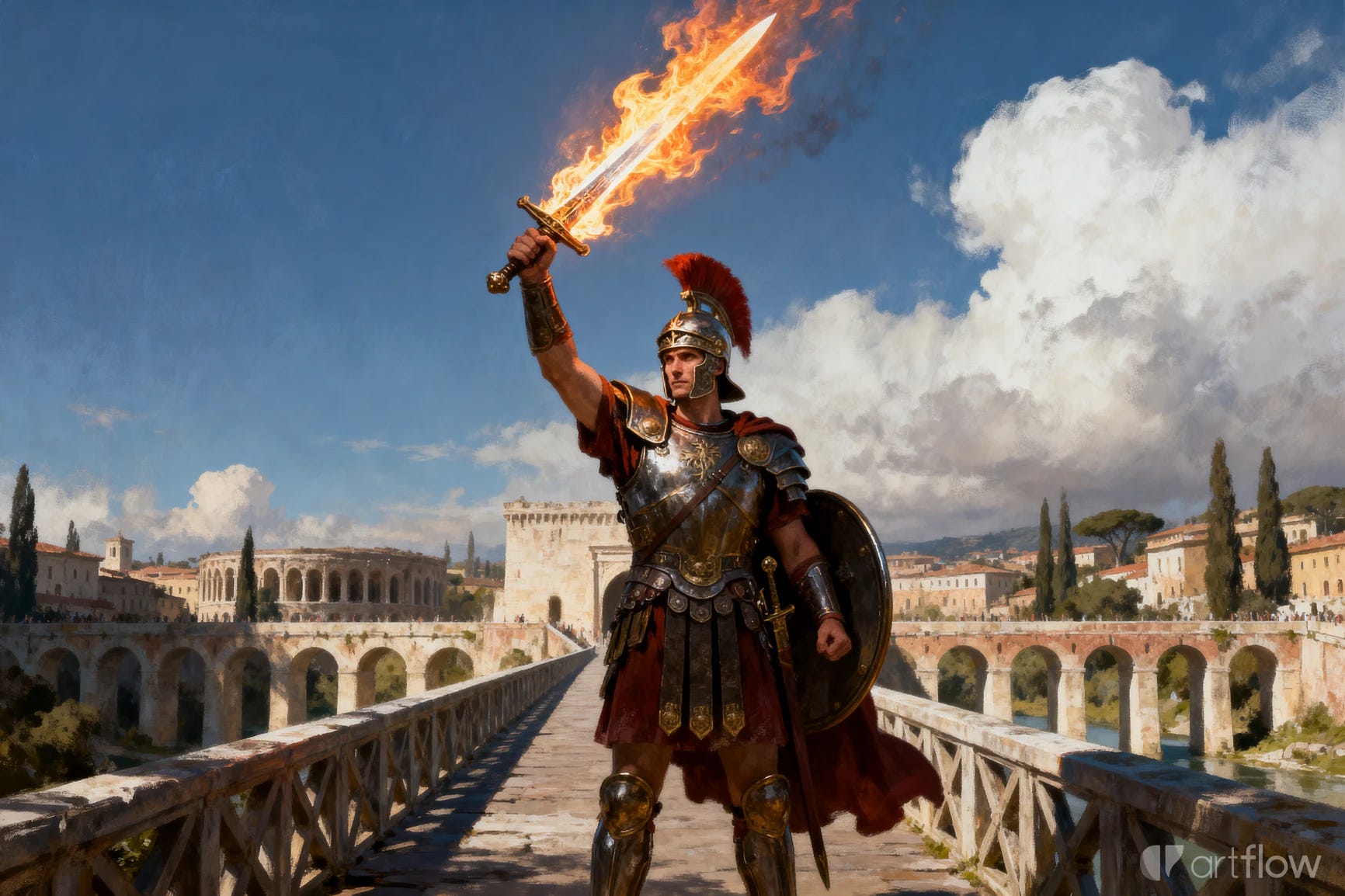
The desires of living creatures are fluid and oft-shifting, but when bound into an item, they crystallize around certain ideals and aims — primarily set by the soul bound to it, but also shaped by the nature of the item itself. A soul bound into a sword will find its thoughts bend towards destruction, just as one bound into a shield will be inclined to protect. Thus, every sapient item has a purpose, composed of a function and a target. The function is strongly influenced by the type of item, generally along the following lines:
Weapon: Attack (slay, hunt, conquer, punish)
Armor or Jewelry: Protect (defend, build up, patrol, liberate)
Book or Scroll: Study (learn, teach, discover, remember)
Crown or Ring: Rule (lead, inspire, infiltrate)
The target is the sort of creature to which it is purposed to apply its function. If desired, this can be randomly rolled using the Creature Type table on JJ p. 164, or that on TT p. 51, or the Random Enemy Type table I shared at the bottom of my original rules for Intelligent Weapons.
Together, these form the item’s purpose. For example, “Destroy Beastmen”, “Protect Dwarves, Gnomes, & Halflings”, “Study Dragons”, “Consume Creatures of Elemental Fire”, and “Rule Elves & Fae” might all be viable purposes. A power that is used by the wielder momentarily and solely in the direct pursuit of an item’s purpose never increases an item’s ego (inversely, if the item dominates its wielder, the wielder can voluntarily choose to grant the item free use of any his abilities without incurring ego).
Mastering a Sapient Item
When a character first attempts to wield a sapient item, he engages in a struggle for mastery with the item. He must make a Death saving throw, at a bonus equal to the difference between his level and the item’s level (thus if he is lower level than the item, he saves at a penalty). He gains a further +2 bonus to the save if the item is of the opposite alignment to his own, but takes a -2 penalty if they share an alignment. No benefits from spells or items apply (the item itself implicitly benefits the same, upon being wielded). On a success, the wielder retains mastery; on a failure, the item gains mastery and dominion over the wielder. In either case, the wielder can freely use the item’s powers for an hour (or the item dominating the wielder can use the wielder’s powers freely), after which its ego is set to 0. (At which point any continued use of powers raises ego as normal.)
While the wielder holds mastery, he can act freely, and use the item’s powers as desired (see Ego and Powers of a Sapient Item, below). However, using these powers will incur ego as described below, and when the item’s ego equals the wielder’s level, it can attempt to wrest control from him in another struggle for mastery (as above).
If the item has mastery, then the wielder becomes dominated by the item. It can use its own powers without incurring ego, and can maintain temporary hp from its own HD indefinitely. Any saving throws made by the wielder or item use the item’s own saving throw (except for a saving throw in another struggle for mastery). However, whenever the item uses one of the wielder’s capabilities (or the character takes damage to his own hp), it incurs ego following the standard rules below (reversing the roles of the character and item). When the accumulated ego equals the item’s level, it triggers another struggle for mastery.
The item loses mastery if it ever leaves the character’s possession, but a new struggle for mastery will occur the next time the character tries to wield it again.
Ego and Powers of a Sapient Item
Every sapient item possesses at least a +1 permanent bonus. If it is not of a form that could normally benefit from such (i.e. not a weapon or armor), the Judge may choose to grant its bonus to AC (a la bracers of armor), a proficiency throw, or nothing, but regardless it counts as having a +1 bonus for purposes of sundering.
A wielder who has mastered a sapient item can draw upon its abilities while it is within 30’ of him, but increases its ego in doing so. The wielder may choose to gain any of the item’s class powers, or class or general proficiencies, increasing the item’s ego by 1 per each gained. Abilities that count as multiple class powers increase ego proportionately more. Each thief skill counts as one class power. Rebuke Undead, Spellsinging, and similar powers count as one class power per relevant build point. Each spell slot used counts as one class power (casting from the bound character’s repertoire), and must be supported by first using a spell slot of a lower level (if any). Using an item’s combat proficiencies can grant the wielder proficiency in one additional category of weapons (as Martial Training) or one additional tier of armor (as Armor Training), each incurring 1 ego. Additionally, the wielder can choose to use the item’s attack throw and damage bonus in lieu of his own, increasing the item’s ego by the effective bonus to each of hit and damage that the wielder is gaining. Finally, the wielder can draw upon the item’s resilience to renew his vitality and endurance, rolling one or more of its HD and gaining the rolled total as temporary hp that last one turn per level of the item, increasing ego by the number of HD rolled. (Spent HD are recovered after spending a dedicated activity interacting with the item.)
These increases in ego only apply the first time such a power is used since the last struggle for mastery — once a wielder starts drawing upon an item for some capability, he can continue to do so without consequence until a struggle for mastery is triggered and resolved. For example, if a wielder uses three of an sapient sword’s HD, he increases its ego by 3. If he then spends a dedicated activity practicing with it, it recovers those HD and he can spend them again without further increasing its ego.
However, powers that are used momentarily and solely in the direct pursuit of an item’s purpose never increase an item’s ego (and inversely, if the item dominates its wielder, the wielder can voluntarily choose to grant the item free use of any his abilities without incurring ego).
Additionally, an item’s ego is increased by 1 each time it suffers a calamity, such as:
Needing to make a saving throw to avoid destruction (e.g. because of a sunder attempt, the Item Loss from Damage custom rule, etc.).
Leaving its wielder’s possession, outside the parameters of normal use (e.g. a sapient javelin can still be thrown in combat, but must be recovered after the combat if not sooner; a book may be left on a table within 30’ while the wielder is working in his laboratory; etc.).
The wielder acquiring another sapient item.
The wielder violating the item’s code of behavior (if any).
The wielder acting directly against the item’s purpose.
All sapient items are capable of perceiving their environment by using their wielder’s senses, by seeing out of any gems in the item (an item without gems can see through a patch of polished metal or a knot in wood, if any), and by feeling tactile sensations upon their surface. They are likewise capable of limited communication via empathic impulses conveyed to their wielder through touch. In lieu of gaining a general proficiency, such items gain an additional mode of sensation or communication upon reaching 5 HD, 9 HD, and 13 HD, selected by the Judge from the following list based on the item’s nature, purpose, and abilities (incurring 1 ego per power used in the wielder’s service, as normal):
Permanently benefit from lightless vision out to 60’ (or 90’ if the bound character possesses Shadowy Senses).
Permanently discern evil, discern invisible, discern magic, or discern poison out to 60’.
Cast locate treasure three times per day.
Cast lay of the land or locate haunting once per day.
Adjusting writing on itself to communicate precise written information (including e.g. maps, spell formulae, etc.).
Telepathy with 0’ range. Taken multiple times improves range by 30’ each time, or permits use of clairvoyancy or clairaudiency with targets contacted by telepathy.
Casting a shared dream once per day, targeting anyone who has ever touched the item. Taken a second time permits corrupting dream to be used instead.
Additionally, sapient items can gain other magical abilities as they advance in HD as well. In lieu of gaining a class proficiency (at whatever levels the bound character would gain them), such items gain a power selected by the Judge from the following list based on the item’s nature, purpose, and abilities (incurring 1 ego per power used in the wielder’s service, as normal):
Gain or increase the item’s permanent bonus by +1, up to no more than the class damage bonus of a fighter of level equal to the sword’s HD.
Wielder gains permanent energy protection, physical protection, lightless vision, or water breathing.
Wielder can weave smoke at will.
Cast phantasmal figment once per three turns.
Cast flight, invisibility, striking, or sustained swift sword on its wielder once per hour.
Cast death ward, giant strength, or neutralize poison on its wielder three times per day.
Cast animate undead, scry, or telekinesis three times per day.
Cast blast ward, contact other sphere, cure critical injury, deflect ordinary weapons, or teleportation on its wielder once per day.
At the Judge’s discretion, other powers with base costs of no more than 25,000gp as magic items might be added or substituted on either list.
Designer’s Note: A transmogrification spell at 2nd level can grant a single proficiency for an hour with 30’ range, and can thus be enchanted into an item for a base cost of 24,000gp. Thus, the above effects are of approximately equal value to the proficiencies that might have been gained.

Sapient Items as Henchmen
A sapient item that a wielder has mastered can potentially be taken as a henchman, if the wielder and item are of the same alignment and the wielder is of higher level than the item. When such an offer is tendered, the character makes a hiring roll but adds their WIL modifier rather than their CHA modifier. No proficiencies may be applied, but the wielder gains a +1 bonus if of the same race or ethnicity (as appropriate) as the character bound into the item, and a further +1 bonus if of the same class. A wielder of a rival race or ethnicity takes a -2 penalty. Finally, a -2 penalty is applied for each sapient item already in the wielder’s possession unless he agrees to divest himself of them.
Likewise, items have no use for monetary bribes, but a bonus can be gained by swearing an oath to fulfill some quest relevant to the item’s interests: a +1 bonus for a quest expected to last at least one week or expose the wielder to typical adventuring danger (e.g. a dungeon of the normal level for their ability); a +2 bonus for a quest expected to take at least one month or involve great jeopardy (e.g. a dungeon level one deeper than normal); or a +3 bonus for a quest expected to occupy at least one year or involving mortal peril (e.g. a dungeon level two deeper than normal).
Once an item is taken as a henchman, it has a starting Loyalty equal to the wielder’s WIL modifier (rather than CHA; Blood of Kings or similar powers increase this normally). It does not expect a share of treasure, but does gain a half share of XP as normal for a henchman (and can thus increase in level in the bound character’s class, gaining new abilities). Loyalty increases as normal when gaining a level, and decreases as normal when a calamity is suffered.
A sapient item does expect to be paid an appropriate wage for a henchman of its level, either in spending appropriate to its interests, or in deeds taken in its service (measured in the wage-value of the wielder’s time spent accomplishing them). Denying an item due compensation for a season or longer counts as a calamity (as normal, but evaluated on a seasonal rather than monthly basis; items are patient, and recognize that wielders are more likely to quest in their service and be more effective doing so when they can make adventures periodically rather than as a constant monthly endeavor).
However, once an item is a wielder’s henchman, it is considerably more willing to serve his needs and lend its powers. Instead of inciting a struggle for mastery when its ego equals the wielder’s level, it does not do so until its ego equals twice the wielder’s level.
Concluding Thoughts
I was initially very concerned about niche protection for bearers of sapient items, but settled upon an answer: any violations of niches present here are already effectively violated by either magic items, or henchmen, or both. Moreover, many such benefits are analogous to those that might be gained from Transformation (e.g. becoming undead), which generally brings a full d8 HD and monster attack progression. Notably, no one is getting multiple additional ranks of armor, or a full suite of weapons they wouldn’t otherwise have access to, and no additional cleaves (though I have gone back and forth on that latter point).
One “issue” this framework does introduce is that it tends to favor divine casters, who level quickly, have excellent Death saves, and have WIL as a prime requisite. This was not really my intent; aesthetically I would prefer for pure fighters to be the best at wielding such items. That is hard to arrange for any system built around saving throws; it was why I’d initially based it off hit points, but that ended up actually just prioritizing CON. I’m very open to suggestions on aligning this more effectively.
I had hoped to see this shared last week, but the last bit of polish to something shareable took a fair bit of work, and proved worthwhile to reformat some things and make sure the whole is self-consistent. My aim of trying to post more consistently in general has been frustrated by my interest angling toward longer posts that tend to require playtesting, but I’m hopeful to identify some more focused topics that are easier to assemble an essay on. I am considering actual play reports, detailing a region of the Auran Empire, building out some PoIs from AX3, and custom monsters as potential approaches, though PoIs in particular do seem likely to sprawl into bigger projects. As ever, I would be glad to take reader considerations into account.
Do you recommend the GM playing the dominated character or letting the player retain control but RP the item?
Possession is nine-tenths the law. Awesome!